
Analysis Comparison: Public Transportation vs Private Bus Companies in Saudi Arabia
In the Kingdom of Saudi Arabia, the bus service sector is undergoing a significant transformation, with a focus on improving efficiency, accessibility, and passenger experience.
Public Bus Services
Limited coverage in outlying locations is a challenge for public bus services, but efforts are being made to address this issue. Vehicles used in public bus services have been upgraded with modern amenities and meet safety regulations. Current trends in public bus services include a strong emphasis on sustainability, digitalization, and smart transport solutions.
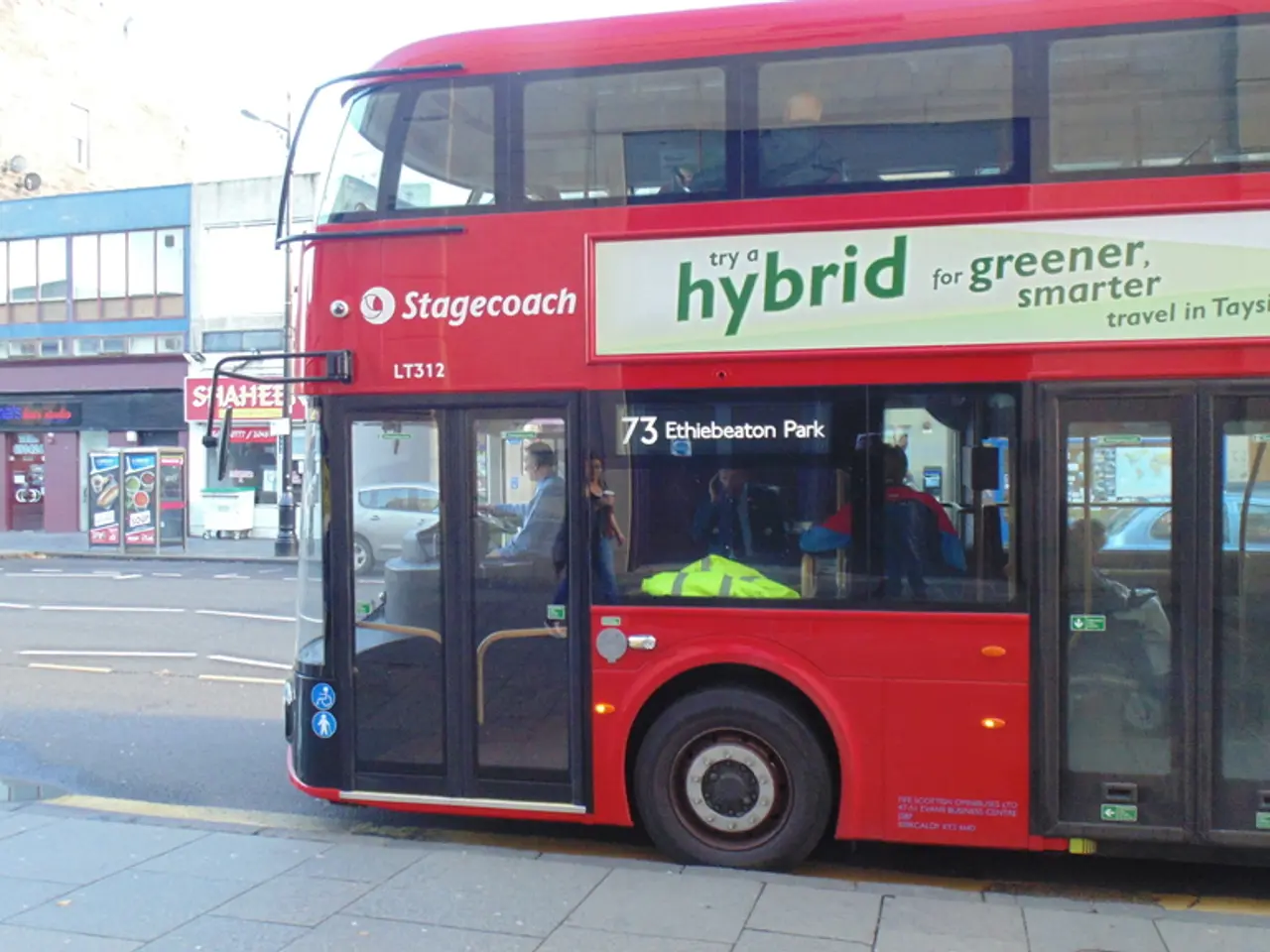
The government is scaling up initiatives like electric and hybrid buses, integrating GPS tracking, real-time passenger information, and contactless payments to enhance efficiency and passenger convenience. Public bus services are moving towards greener fleets, incorporating electric vehicles (EVs), and expanding bus rapid transit (BRT) systems to improve urban mobility cost-effectively.
Private Bus Services
As tourism expands, private bus services, particularly those serving tourism and charter needs, are growing in popularity. These services tend to offer more luxury and customized amenities, catering to international and domestic tourists. They leverage smart technologies like AI for personalized travel experiences and IoT for enhanced comfort, especially in tourist-heavy regions like Neom and the Red Sea Project.
Private bus services offer more flexible routes and schedules, responding to the unique demands of commuters and enterprises. They may provide a more comfortable and personalized commuting experience with amenities like Wi-Fi, air conditioning, and personalized services.
Comparing the Two
In terms of cost, public buses are generally more affordable and subsidized, aimed at mass transit users. Private bus charters are comparatively more expensive due to added luxury, customization, and personalized services.
Regarding accessibility, public buses provide wider coverage intended for daily commuters across urban and suburban areas and focus on integrating smart city infrastructure for ease of use. Private buses focus on niche markets, including tourism, pilgrimage, and long-distance travel, offering greater comfort and flexibility but less widespread geographic coverage.
Customization is a notable differentiator where private services excel, offering tailored travel itineraries, luxury interiors, and technology-enhanced experiences which are less prominent in public bus fleets that emphasize standardization and cost-efficiency to serve the masses.
These developments reflect Saudi Arabia’s overarching goals of sustainability, modernization, and economic diversification through technological integration and enhanced passenger experience in both public and private sectors. However, challenges such as overcrowding during peak hours in public bus services and the timings of public transport not being suitable for everyone remain areas for improvement.
[1] Al-Rasheed, A., et al. (2021). "Sustainable Urban Mobility in Saudi Arabia: Challenges and Opportunities." Sustainability, 13(6), 3168. [2] Al-Khateeb, M., et al. (2020). "Digital Transformation in Public Transportation: A Case Study of the Saudi Public Transport Authority." Journal of Intelligent Transportation Systems, 24(1), 112-124. [3] Al-Khateeb, M., et al. (2021). "Electrification of Public Transportation in Saudi Arabia: A Review and Future Directions." Sustainability, 13(18), 8690. [4] Al-Mulhem, A., et al. (2020). "The Role of Smart Transportation Solutions in Enhancing Urban Mobility in Saudi Arabia." Future Cities and Environment, 128, 324-334. [5] Al-Khateeb, M., et al. (2021). "The Impact of COVID-19 on Public Transportation in Saudi Arabia: A Review of Current Challenges and Future Opportunities." Transportation Research Part A: Policy and Practice, 144, 103746.
The Kingdom's emphasis on sustainability extends to both sectors, as the government invests in electric and hybrid buses for public bus services, and private bus services begin to incorporate eco-friendly vehicles and technologies.
The financial sector plays a crucial role in driving the transformation of the transportation industry, with private bus services relying on funding for luxury amenities and smart technologies, while public bus services depend on investments to improve efficiency and passenger experience.